Anxiety does not always show up as obvious worry or panic. In many cases, it presents through patterns that feel unrelated at first glance. People often spend months or even years trying to fix sleep, productivity, or physical discomfort without realizing that anxiety is quietly driving these experiences in the background.
What makes unusual anxiety symptoms difficult to identify is that they often feel like personality traits, lifestyle issues, or temporary phases. They are easy to rationalize and even easier to normalize. Over time, however, they begin to affect how a person functions, makes decisions, and relates to others.
At Weiss Wellness LLC, these patterns are often the starting point of therapy. Under Tracey Weiss, the focus is not just on identifying anxiety, but on understanding how it operates in subtle, day-to-day ways and how those patterns can be changed.
Below are some of the more unusual anxiety symptoms, what they actually mean, and what can be done about them.
When Productivity Starts Feeling Like Pressure Instead of Progress?

One of the more misleading signs of anxiety is constant productivity. On the surface, it looks like motivation and discipline. In reality, it can be driven by an internal pressure that makes it difficult to slow down.
You may notice:
- Feeling uneasy when you are not being productive
- Constantly adding tasks even after completing others
- Difficulty resting without guilt
- Measuring self-worth based on output
This is not simply ambition. It is often anxiety creating a sense that stopping is unsafe or unproductive.
What this usually means
The mind is trying to stay ahead of uncertainty by staying busy. Productivity becomes a way to avoid uncomfortable thoughts or emotions.
What to do
| Strategy | How It Helps |
| Set a fixed “end time” for work | Trains your brain to tolerate stopping |
| Schedule non-productive time intentionally | Reduces guilt around rest |
| Track completion rather than adding tasks | Shifts focus from doing more to doing enough |
When You Feel Disconnected Instead of Overwhelmed
Not all anxiety feels intense. Sometimes it feels like the opposite.
You may notice:
- Feeling emotionally flat or detached
- Going through your routine without engagement
- Difficulty connecting with people or experiences
- A sense that things feel “off” but not clearly distressing
This can be confusing because it does not match the typical idea of anxiety.
What this usually means
The nervous system is overloaded and shifts into a protective state that reduces emotional intensity. Instead of feeling too much, you start feeling less.
What to do
| Strategy | How It Helps |
| Engage in sensory activities (walking, music, textures) | Helps reconnect with the present moment |
| Reduce multitasking | Allows your mind to re-engage with one experience at a time |
| Notice small emotional reactions | Rebuilds awareness gradually |
When You Avoid Things Without Realizing It
Avoidance is not always obvious. It can look like delay, distraction, or preference.
You may notice:
- Putting off emails, calls, or decisions
- Choosing easier tasks over important ones
- Avoiding situations that feel slightly uncomfortable
- Telling yourself you will “do it later” repeatedly
It often feels justified in the moment.
What this usually means
Your brain is trying to reduce discomfort. Avoidance provides short-term relief but increases anxiety over time.
What to do
| Strategy | How It Helps |
| Use the “5-minute start” rule | Reduces resistance to beginning tasks |
| Break tasks into smaller steps | Makes them feel manageable |
| Track avoided tasks | Builds awareness of patterns |
When Your Body Feels Off but Nothing Is Medically Wrong
Anxiety frequently shows up physically before it is recognized mentally.
You may notice:
- Tightness in the chest or shoulders
- Digestive discomfort
- Frequent headaches
- Restlessness or inability to sit still
These symptoms often lead people to seek medical explanations first.
What this usually means
The body is responding to stress signals even if you are not consciously aware of them.
What to do
| Strategy | How It Helps |
| Practice slow breathing (longer exhales) | Signals the body to calm down |
| Add short movement breaks | Releases physical tension |
| Pay attention to when symptoms appear | Helps identify triggers |
When You Need Constant Reassurance?
Seeking reassurance can become a pattern that feels necessary.
You may notice:
- Asking others to confirm decisions repeatedly
- Doubting choices even after making them
- Feeling temporary relief after reassurance, followed by doubt again
This cycle can be exhausting.
What this usually means
There is difficulty tolerating uncertainty. External validation becomes a way to feel stable.
What to do
| Strategy | How It Helps |
| Delay asking for reassurance | Builds internal decision-making |
| Write down your reasoning before asking others | Strengthens confidence |
| Accept partial uncertainty | Reduces dependence on external validation |
When You Get Irritated Easily
Anxiety is not always experienced as fear. It can show up as frustration.
You may notice:
- Reacting strongly to small inconveniences
- Feeling impatient or overwhelmed quickly
- Getting irritated in situations that did not bother you before
This is often misunderstood as a personality change.
What this usually means
Your baseline stress level is already high, so additional input feels overwhelming.
What to do
| Strategy | How It Helps |
| Identify early signs of irritation | Helps you intervene sooner |
| Take short breaks during the day | Prevents buildup of stress |
| Lower expectations during high-stress periods | Reduces pressure |
When You Feel “On Edge” Without a Clear Reason
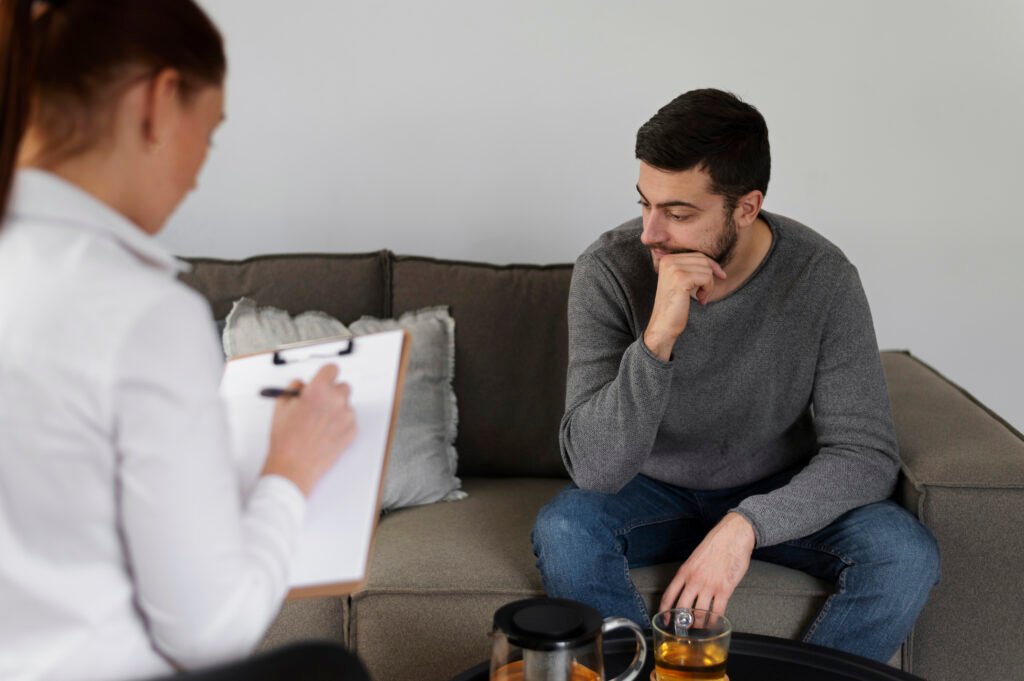
This is one of the most common unusual symptoms.
You may notice:
- A constant sense of unease
- Difficulty relaxing even in calm situations
- Feeling like something is wrong without knowing what
There is no clear trigger, which makes it harder to address.
What this usually means
Your nervous system is in a heightened state, even without a specific threat.
What to do
| Strategy | How It Helps |
| Create predictable routines | Provides a sense of stability |
| Limit constant stimulation (news, social media) | Reduces background stress |
| Practice grounding techniques | Brings attention back to the present |
Why These Symptoms Are Often Missed
These patterns are easy to overlook because they do not always disrupt life immediately. Many people continue functioning at a high level while experiencing them.
They often get labeled as:
- Being driven
- Being careful
- Being sensitive
- Being tired
Because they are not recognized as anxiety, they are not addressed at the root level.
When These Patterns Start Affecting Your Life
Over time, these symptoms can begin to interfere with:
- Decision-making
- Relationships
- Productivity
- Emotional well-being
- The shift is gradual. What once felt manageable starts to feel exhausting.
Recognizing this shift is important because it indicates that the patterns are no longer sustainable without support.
How Therapy Helps Address Unusual Anxiety Symptoms
At Weiss Wellness LLC, therapy focuses on identifying how these patterns show up uniquely for each person. Under Tracey Weiss, the approach is structured and practical.
This includes:
- Understanding how thoughts influence behavior
- Identifying triggers that are not immediately obvious
- Building strategies that can be used in real-life situations
- Gradually reducing avoidance and increasing confidence
Rather than focusing only on symptoms, therapy focuses on how those symptoms affect daily functioning.
A Quick Overview
| Symptom | What It Often Means | First Step |
| Constant productivity | Avoiding discomfort | Schedule rest intentionally |
| Emotional disconnection | Nervous system overload | Engage in sensory activities |
| Subtle avoidance | Fear of discomfort | Start with small actions |
| Physical tension | Underlying stress | Practice breathing and movement |
| Reassurance seeking | Difficulty with uncertainty | Delay validation |
| Irritability | High baseline stress | Take breaks earlier |
| Feeling on edge | Heightened nervous system | Create routine |
Final Thoughts
Unusual anxiety symptoms are not always dramatic, but they are often persistent. They show up in patterns that feel familiar, which is why they are easy to ignore.
The goal is not to eliminate anxiety completely. It is to understand how it is influencing your thoughts, behaviors, and body, and to respond in a way that feels more balanced.
At Weiss Wellness LLC, therapy is designed to make these patterns visible and manageable. With the guidance of Tracey Weiss, the process focuses on building awareness and translating that awareness into practical change.
When these patterns are recognized early, they are much easier to shift. And often, that awareness is what begins to reduce the constant background noise that anxiety creates.